
So, I’m writing this a few months after attending a metal show up in DFW. I saw Opeth, In Flames, and Red Fang. I got home around 2 in the morning.
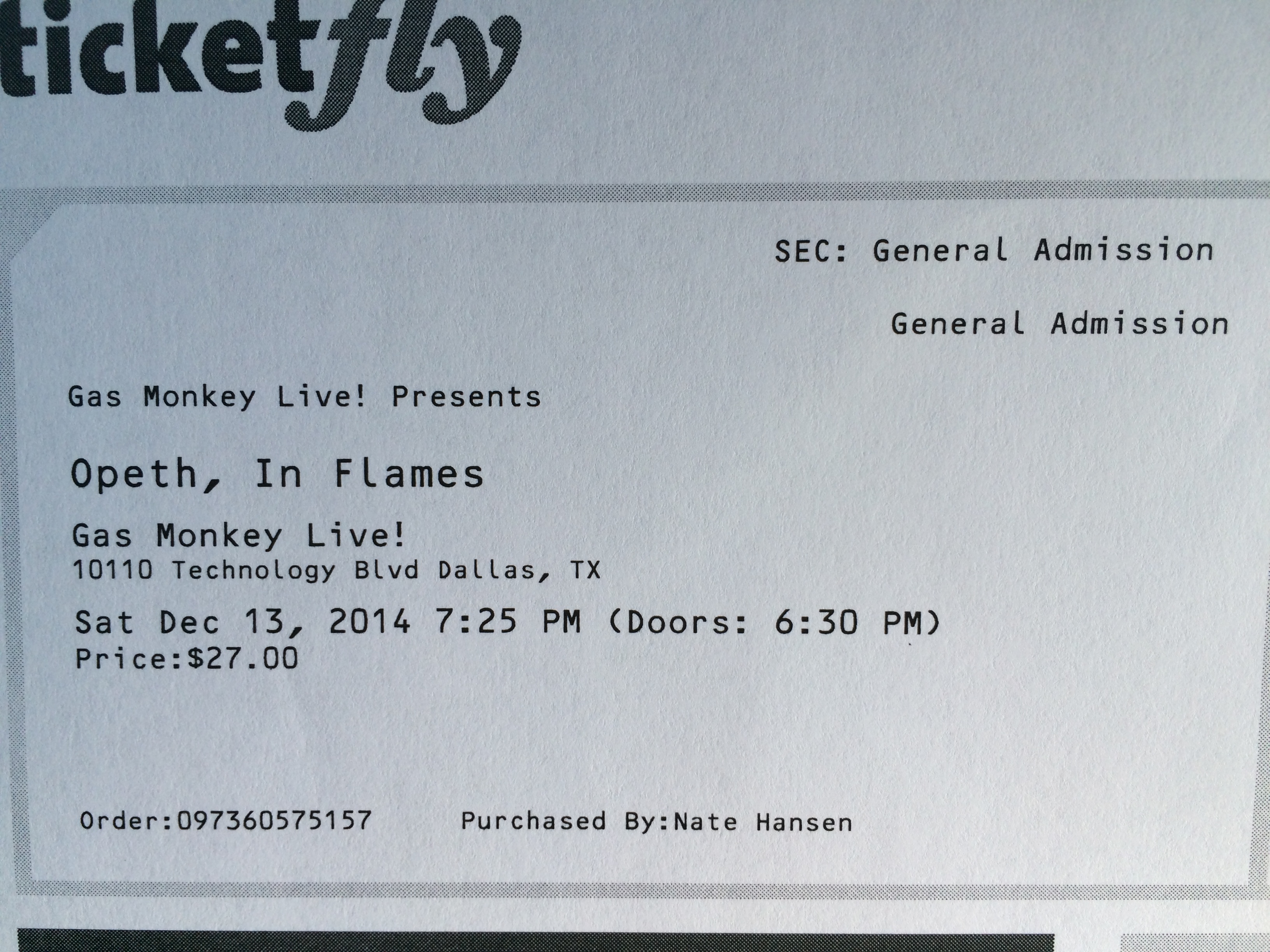 I’m nearly 40, and yet there’s something about metal (and especially the subgenre of progressive metal) that appeals to me still ever since my freshman year of high school when Metallica’s black album was released and I also “discovered” Yes’s Fragile album (1972). The virtuosity for one, the ambition for another.
This is third time I’ve seen Opeth (first in 2008 on the Progressive Nation Tour in Minneapolis, and then in Pittsburgh in 2012 on a co-headlining tour with Mastodon), and as I’m writing I’m listening to their most recent album, Pale Communion, which is wonderful. Lots of great guitar work, cool organ and piano parts, rich vocal harmonies, and beautiful acoustic passages. Way more than 3 or 4 chords.
I’m a fan of many genres of music, but the three I listen to the most are classical, jazz, and metal (of various strands, with progressive and death being my favorites). Those three genres contain some of the most complex music, music that invites multiple listens.
With Opeth (and their particular brand of metal) I find that I’m always discovering new things in their music, even after dozens of passes through individual songs. Their catalog of 11 albums possesses a variety, their sounds a rich tapestry that, I’m convinced, no one can match.
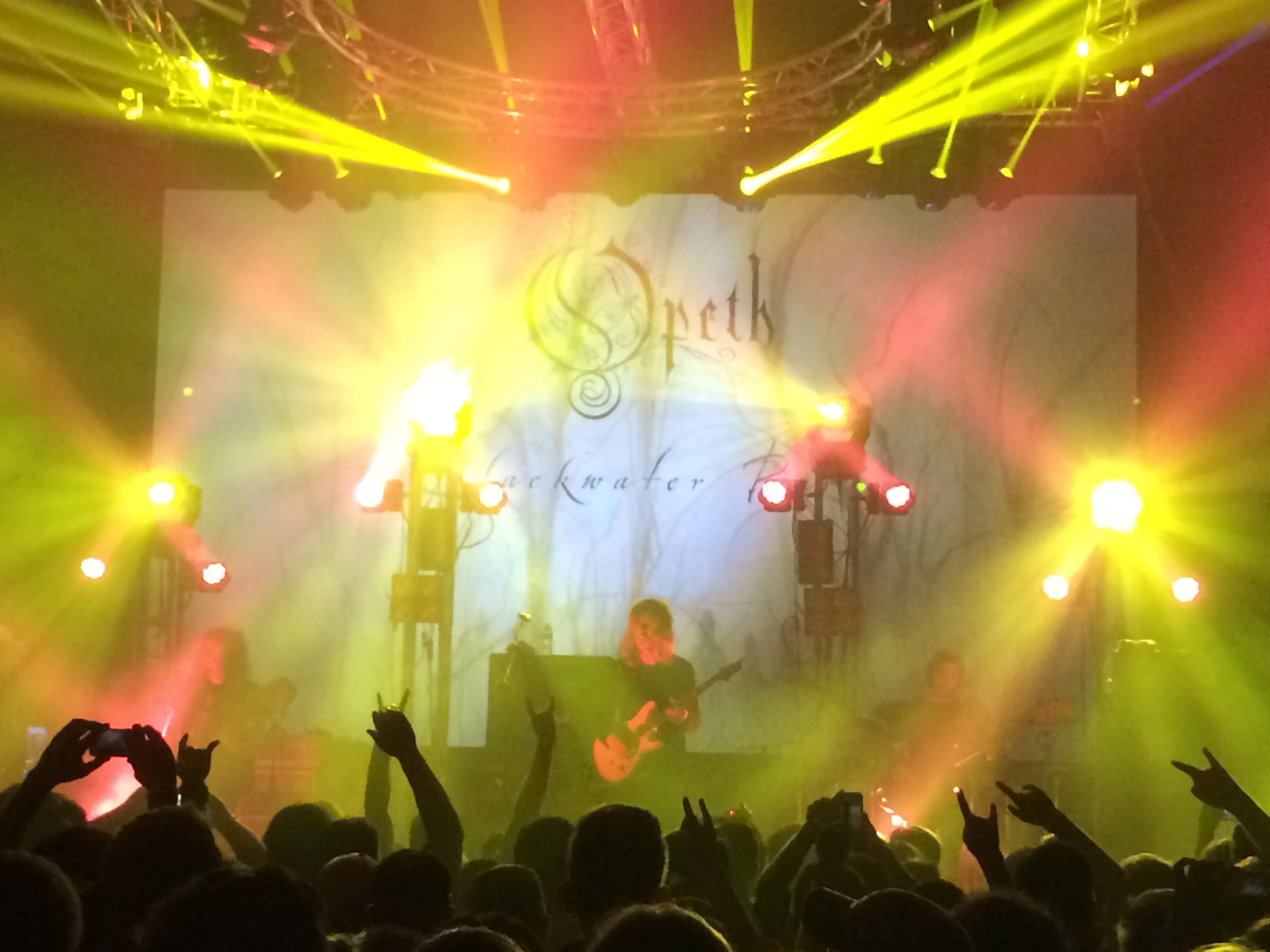
These are just few of the several dozen photos I took that evening. My iPhone camera doesn’t do justice to the amazing lighting schemes that accentuated their music. It was the perfect experience to lead me into the semester break.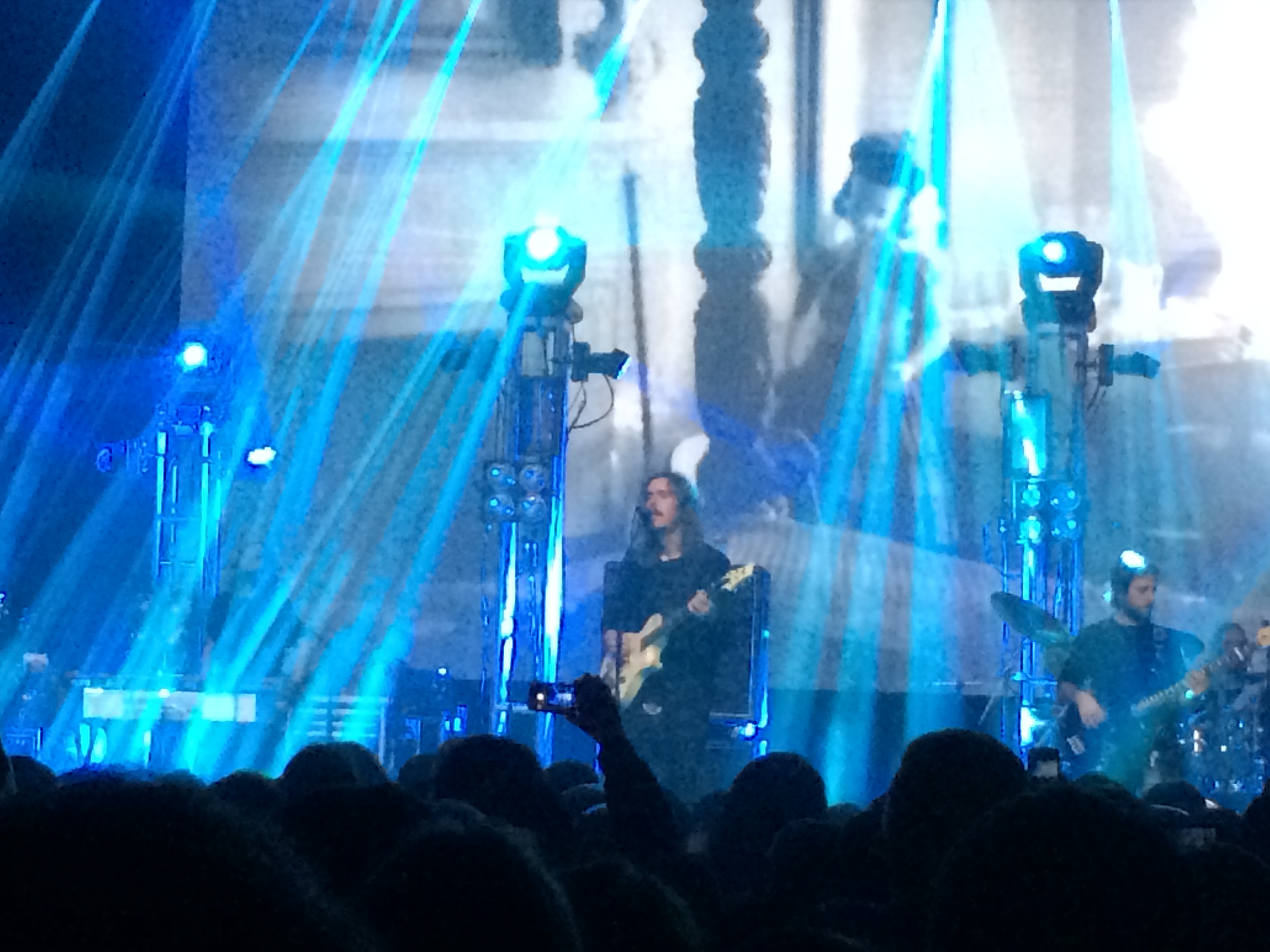
Mikael Akerfeldt is an amazing guitarist, as well as an amzing vocalist who can deliver deep growls as well as pristine clean vocals in his rich baritone. 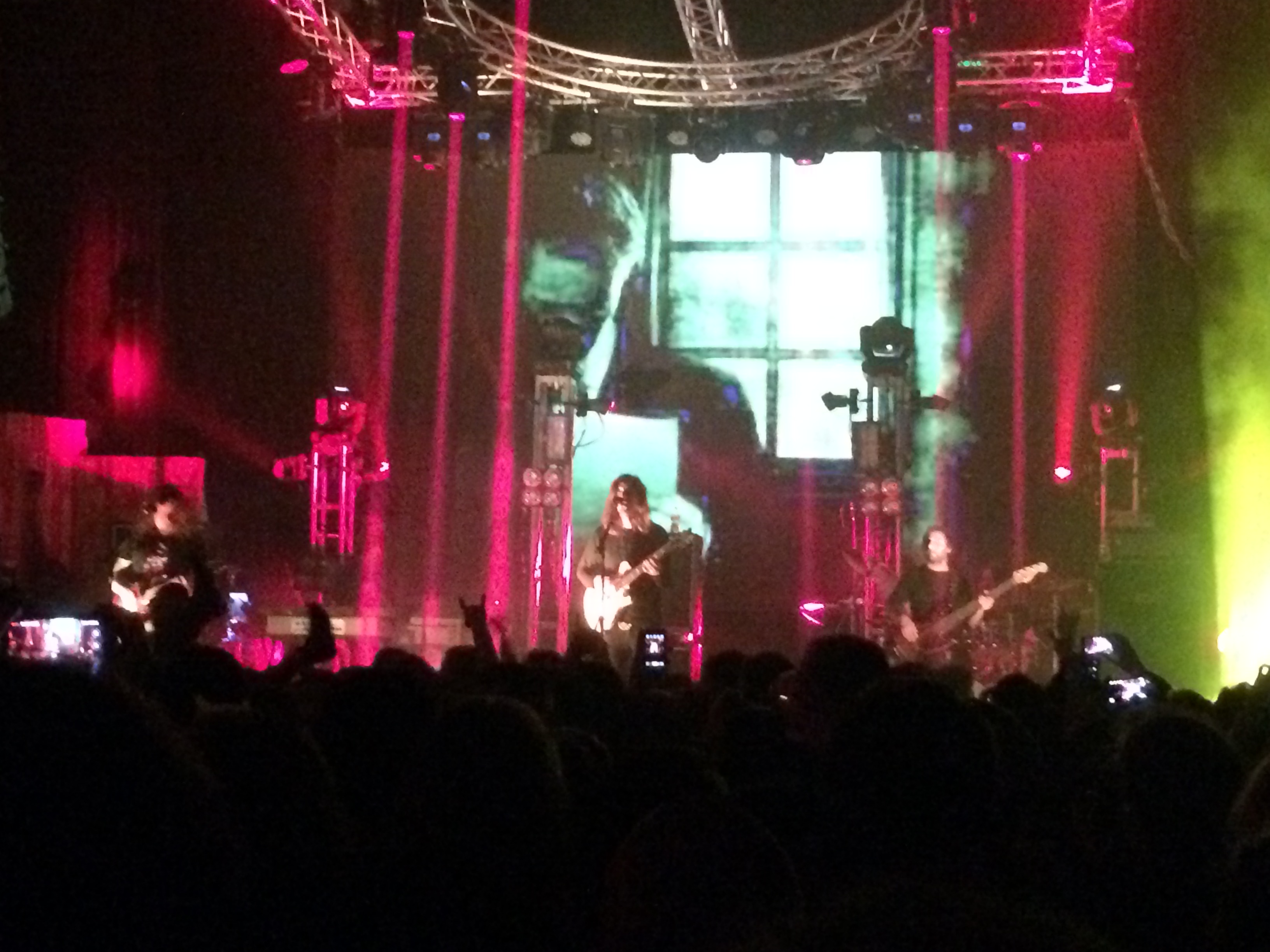
Since they were co-headlining with In Flames, Opeth played only 7 songs. Each one was at least 10 minutes though, and their last song, “Deliverance,” was three days long, acccording to Akerfeldt.
I only wish that they weren’t from Stockholm, Sweden, so that they could play more U.S. shows.
Will I ever grow out of listening to metal? I don’t know. I kind of thought that I would have by now (being a dad and all), but nope. Power chords, distortion, and double-kick are a part of my DNA.
 Plainswriter