On Editing (#3)

I’ve had the privilege of working on various literary journals over the last 15 years, and none has demanded as much work and time commitment as has my editorship with Windhover: A Journal of Christian Literature. None has brought me such satisfaction.

This afternoon I finalized the selections for the fourth issue I’ve edited, an issue that will be larger (again) than the previous year’s issue. Each issue I’ve edited has grown in size, from 18 contributors in the 2013 issue, to 50+ contributors in the forthcoming issue. This forthcoming issue also marks the 20th volume, the first issue having appeared in 1997. It’s amazing to me that a journal with such a distinct focus is still continuing two decades later, and I count it an honor to edit such a publication.

My history with the journal dates back to my poetry submission in 2005. The following fall, I received my official rejection letter. When I assumed the editorship in the summer of 2012, I discovered the electronic version of my rejection letter and printed it. (I’ve told this story before in various places, but I still find it ironic and amusing.)

Now that the acceptances are complete, I will commence in one of my favorite tasks: organizing the issue. Editors organize their issues with various rationales, but I have taken my cue from Brian Bedard, the former editor of South Dakota Review where I served as managing editor during my doctoral studies. Brian arranged the issue so as to create an arc, with links between pieces (maybe an image from a poem echoing in a short story that followed). When I proofread the pieces after he informed me of the table of contents, I was always amazed by the connections he made.

In my role as editor, I employ that same guiding principle. I reserve several hours and then spread out the accepted pieces on the large tables in my department’s breakroom. I pace, I shuffle paper, and I look for those links. And just as there’s an exhausted satisfaction when I’ve completed the selections (and when I’ve created a proof and when I see the physical issue), there’s a satisfaction and pleasure when I’ve solidified the order.

But for now, it’s time to relax and to enjoy that extra hour.

On an Autumn Hike

It feels good to be back writing in this space after a busy stretch. Four out of the last five weekends (including this one) I’ve been involved in a writing-related conference of some sort, but I’ve caught my breath, sitting at a downtown coffeeshop on a quiet fall morning. There’s hot coffee to my right, a pumpkin muffin to my left, and small-town blue sky over the storefronts.

I’m in Missouri attending a creative-writing pedagogy conference at the University of Central Missouri, and because the conference is smaller, I have had some down time to let my mind relax. The weather’s been gorgeous, compared to back home in Central TX. 60s, no humidity, nice breeze. Before yesterday afternoon’s sessions, I went to Knob Noster State Park and hiked for an hour on two trails. It was the right weather for my favorite wardrobe: jeans and a T-shirt.

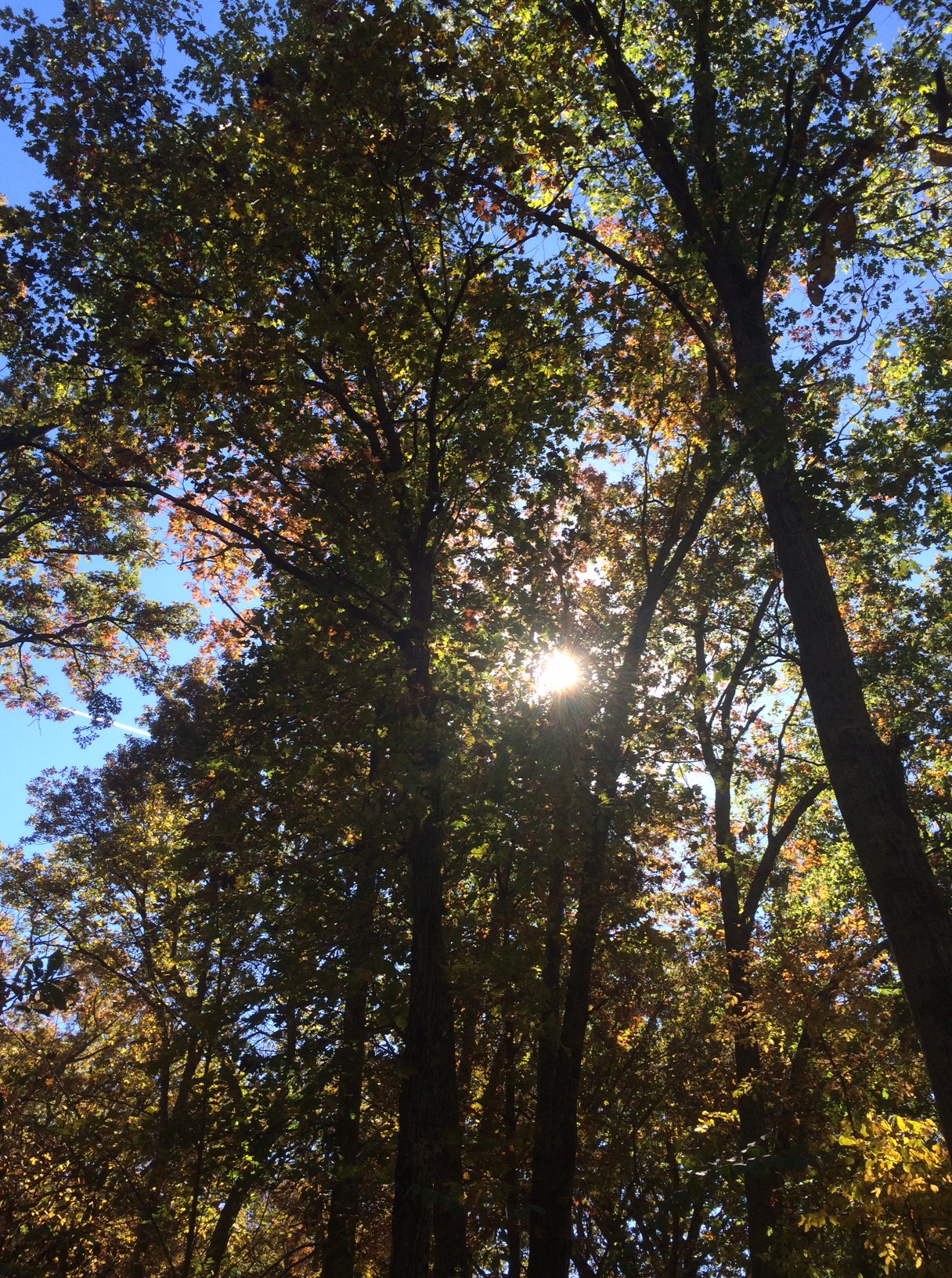
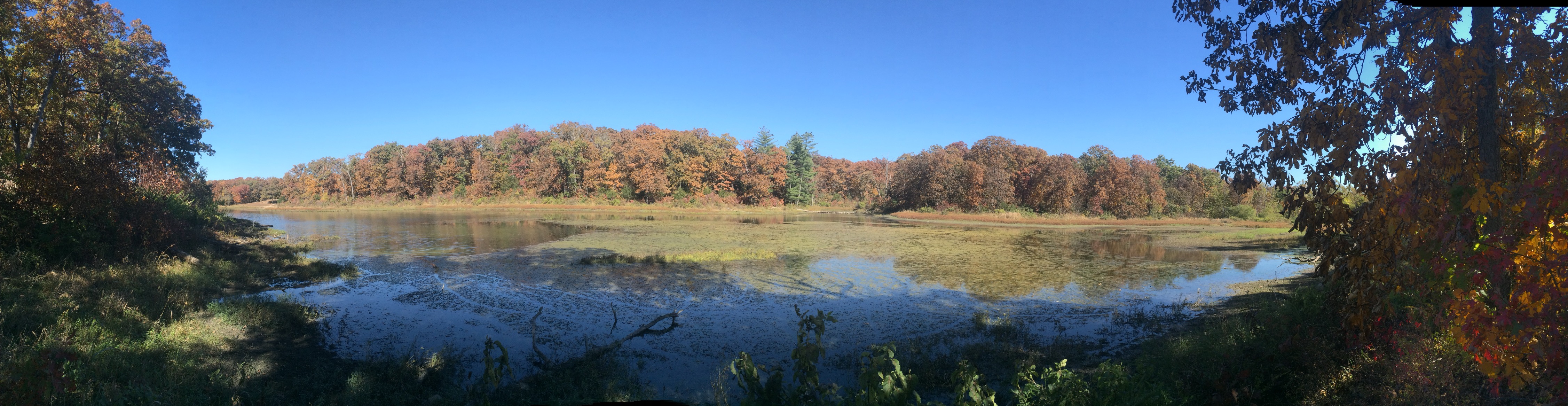
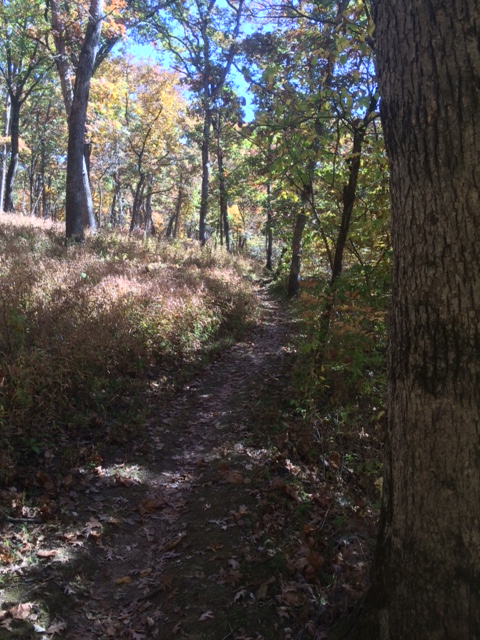
As I walked on the trails, leaves and acorns occasionally dropped, and I enjoyed the golds, the light tans, and the occasional reds. Even though I was in woodlands, I was reminded of those wonderful Minnesota autumn days walking home from school, leaves everywhere, that beautiful span of time before the cold began its numbing descent. And I found myself thinking of Robert Frost’s poetry, the poet whose work has been close by me, dating back to high school. Images of trees, of leaves, of autumn, all in that controlled, artful metrical verse.

Lastly, here are the opening lines of Frost’s “October” along with some the photos I took:

O hushed October morning mild,
Thy leaves have ripened to the fall;
Tomorrow’s wind, if it be wild,
Should waste them all.
The crows above the forest call;
Tomorrow they may form and go.
O hushed October morning mild,
Begin the hours of this day slow.

IMG_0830

IMG_0828

IMG_0835(1)

IMG_0834

IMG_0832

On Revision

I’ve lately been chewing on “revision.” Two weeks ago in my freshman composition class, I initiated a discussion of students’ writing processes, also bringing up that very word. Two weeks ago in my creative writing class, we read and discussed Anne Lamott’s classic essay, “Shitty First Drafts.” Some of my students discovered a revolutionary approach to writing.

In that beautiful piece, Lamott argues that writers would do well do write first drafts in which they do not restrain themselves. Writers must allow themselves to pursue whichever directions, unconcerned about the end result. She urges writers to imagine their critics as mice and place them in a jar so that they will not distract writers in that important stage of completing a first draft.

A while back I touched on some ideas related to the writing process (in a post on my university’s faculty blog), but I am returning to revision. My creative writing students have asked (and will keep asking), “so how do you know when a piece is finished? How do you know when it doesn’t need more revision?” Those are difficult questions that I answer with my common answer, “it depends.” An example might serve best.

Last Friday morning at an academic conference, I read an original (and as yet-unpublished) short story: a part of my short-story cycle that was my PhD dissertation. I wrote the first draft in March 2010. In the time since, it has undergone various revisions and “versions.” The draft as I read it Friday clocked in at just under 3,400 words. Another version of the story, with a different direction and ending and overall tone, clocked in at 6,500 words.

While I read the story to the audience, I felt as though it was working well, but 5 1/2 years later, I still wasn’t sure. Immediately after I finished reading it, I thought, “I need to cut the first 1/3 of the story, the opening scene.” In the time since then, and having shared my thoughts with my wife who has read the various versions, I received five verbal affirmations of the story from conference participants (fellow writers themselves), and even an email from another participant (sent near midnight).

When is the story done? A good question. Paul Valery quipped the poem is never finished but only abandoned. I like that idea (minus the connotation of abandonment).