On the Pleasures & Demands of Poetic Form

I’ve been busy revising poems as a part of a summer research grant from my university. That time so far has been satisfying and productive. Last week, for some reason, I found myself using certain forms in three of the five poems I revised. Two sestinas and a pantoum.

With one of those poems, I observed a pattern of repetition in initial draft–a way of turning over the subject of the poem–and I thought, maybe this could be a sestina. And then I thought, that’s too much work. Over an hour later, however, I had succeeding in creating a sestina. (More on that form in a moment.)

My impulse and attraction to so-called “fixed” forms might be a holdover from my Creative Writing: Poetry course this spring. Students wrote in a variety of poetic forms, including some that use repeating lines: villanelles, pantoums, triolets. There is usually much initial resistance to these particular forms (as was the case this semester), but students eventually came to appreciate (and even enjoy) working in these forms.

A pantoum uses four-line stanzas (quatrains), with the requirement that lines two and four of each stanza become one and three of the following stanza. The poem can be any number of quatrains (but a minimum of 3), and the poem’s first and third lines return as the second and fourth lines of the final stanza, usually inverted. Some pantoums rhyme abab, and some don’t use a rhyme scheme. Poets, as can be expected, vary in their strictness of repetition.

I’ve written a handful of pantoums, but it had been a long time since I had attempted a sestina, a 39-line poem that uses six repeating end words. These six words recur in different orders in sestets (six-line stanzas) throughout the poem, and the poem concludes with a tercet (three-line stanza) that includes two of the end words per line. Part of the fun of the form is figuring meaningful ways to use each end word seven times.

(Side note: I’ve learned that if you start tweeting about how you’re writing in certain poetic forms that someone might challenge you to a duel. A friend saw my tweet and promptly challenged me to a sestina duel, picking three of the six end words, allowing me to pick the other three.)

Writing in a “fixed” form that uses repetition is one of my favorite poetic approaches. The form provides a structure, an architecture. a set of boundaries. After all,  writing–whether poetry, fiction, creative nonfiction, a blog post–involves a search for form in conjunction with a search for subject.

Just as any writer, I have subjects and images to which I regularly return, and writing in a form that requires repetition often helps me shape my ideas, my words. I find these forms (and other patterns and forms–sonnet, meter, syllabics) often enable me to explore my ideas more effectively. In these forms’ demands, I (paradoxically) find poetic freedom.

Now to finish up the draft of a new sestina. How am I going to use the word __________ repeatedly to end lines?
What I’m Working On–5.9.16

Grades are done for spring semester, and graduation has passed. I start teaching two summer classes in seven weeks, and once those commence there will be time for little else. In this interim I’ll be preparing for those classes, as well as my fall courses.

But from now until the end of June I’ll be focusing on two major writing projects:

1) Writing an essay for an anthology.

1917 marks the 100-year anniversary of the death of Oswald Chambers, and through a contact in a Facebook group, I learned of an upcoming anthology of essayists writing about a specific passage from his classic work, My Utmost for His Highest. Chambers’s book was foundational to my spiritual growth, and my copy has sentences underlined in almost every entry. I queried the editor and received a spot in the forthcoming book.

The next challenge was finding a passage upon which to write my essay. Over several evenings, I reread the book, starring many passages that might serve as an effective springboard for extended reflection. Finally, I found the passage that fit perfectly with some of the topics I’ve been exploring in my posts over at altarwork.com.

Although the length of the essay (1,500 words) is manageable, I’ve never done something quite like this before. There’s a nervous excitement about this project. We’ll see what happens.

2) Revising and organizing a poetry manuscript.

Just as in 2014, I received a summer research grant from my university to work on a book-length project. Unlike last time when my focus was a short-story collection, this summer’s project involves a manuscript of forty-plus poems, tentatively titled, Your 21st-Century Prayer Life.

I wrote the majority of these poems during Lent 2014 when I decided to draft a poem a day, narrowing my subject matter to prayer and the church. Those poems, along with less than a dozen others, constitute

Each day I’ll be working on a poem or two and also attempting a sequencing of the poems. I have some initial ideas about how the collection might be organized, but I have no dominate ideas. As a result, I’ll be passing on the poems to a writer friend for his suggestions on organizing and further revising them.

*

Beyond these two major projects, I’ll be blogging in this space each Monday, and blogging over at Altarwork.com each Friday. I relish in the challenge of writing something each week, feeling as though I’m some kind of newspaper columnist. The weekly writings help me stay grounded and well-practiced.

I’m grateful for this time of year that affords me the space to pursue these projects. Toward the end of May, I will be gone for six days, spending part of the time with a writing friend and her family and attending a writing retreat where I hope to work on these two projects even more diligently.

It’s going to be a good summer.

2015 in Review

It’s four days into 2016, so I’m due to offer some reflections on 2015. I’m grateful for so many wonderful memories I made over those 365 days. The year was significant for me in several ways, some of which I’ll be sharing here, some of which I’ll be sharing over at altarwork.com (where I’m now blogging every Friday). In the latter venue, I’ve already written about my most important day of the year.

But now, in lieu of a more cohesive post, I’ll share some random “tops” and “favorites” of the year.

Favorite New Album: Shockwave Supernova, by Joe Satriani

Other Favorite New Albums: Hand. Cannot. Erase. by Steven Wilson.

Love, Fear, and the Time Machine, by Riverside.

Helios / Erebus, by God Is An Astronaut.

A Head Full of Dreams, by Coldplay

Most Important Book: Life Without Ed, by Jenni Schaefer

Favorite Book: The Complete Short Stories of Ernest Hemingway

Other Favorite Books: Death Comes for the Archbishop, by Willa Cather.

Beyond the Bedroom Wall, by Larry Woiwode.

The Geography of Memory, by Jeanne Murray Walker

Love’s Labors, by Brent Newsom

Favorite Concert: The Choir (playing the full Circle Slide album)

Favorite Movie: The Peanuts Movie

Favorite Weekend Activity: playing keys and singing bgvs at Vista Community Church

Favorite “Athletic” Moments: running a 10k and two 5ks

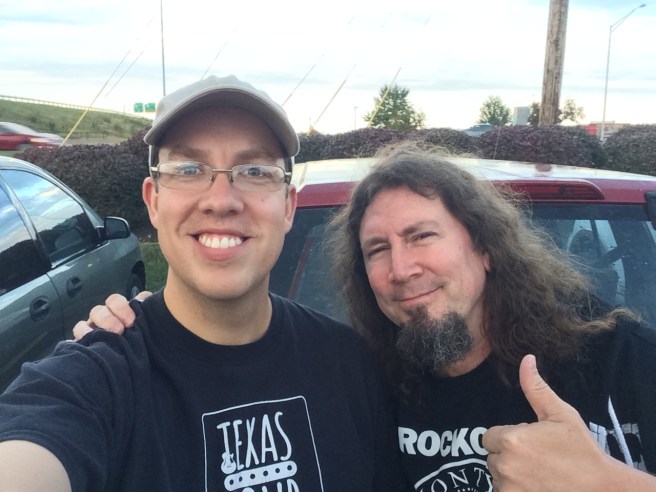
Favorite Celebrity Meeting: Monty Colvin, bass player/vocalist in Galactic Cowboys, guitarist/vocalist for Crunchy.

IMG_0824

Favorite Interesting Experience: sitting in on a Sunday-school class taught by Oklahoma Poet Laureate, Benjamin Myers @OKPoetLaureate

Favorite Teaching Moment(s): My summer Religion and Literature course (with works by Bret Lott, Tania Runyan, Gina Ochsner, Brent Newsom, Addie Zierman, Larry Woiwode, Jeanne Murray Walker, and Benjamin Myers).

Fun Trip Destinations: Minneapolis, Galveston Island, Kansas City, Lake Michigan, rural Minnesota

Favorite Publication: “The North-Central Iowa Spring Break Blizzard Tour” (published in The Cresset)

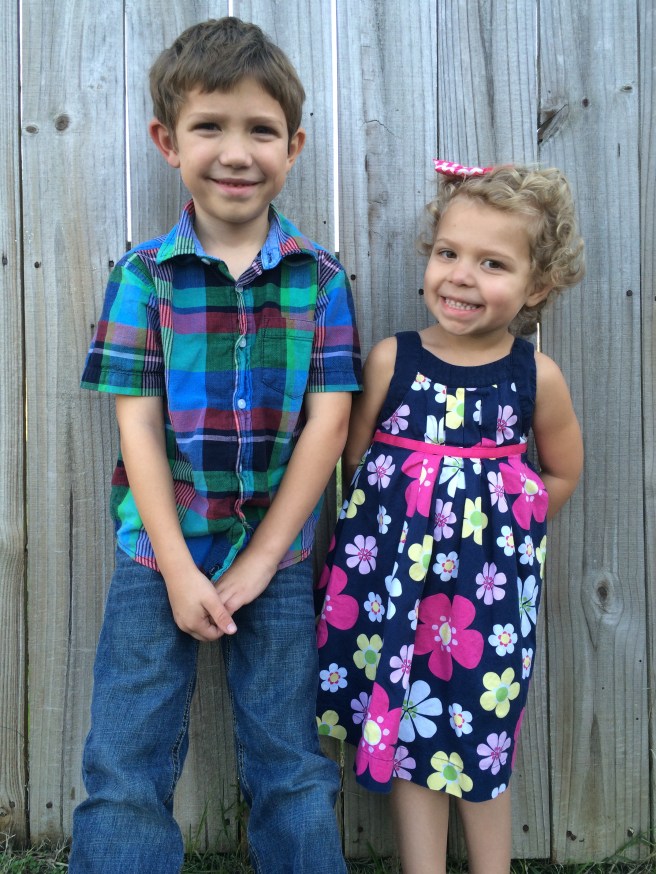
Favorite Photo I Took: 

IMG_0880

I’m looking forward to a good 2016, filled with good books and music, lots of writing, good classes to teach, and supportive friends and family.