2015 in Review

It’s four days into 2016, so I’m due to offer some reflections on 2015. I’m grateful for so many wonderful memories I made over those 365 days. The year was significant for me in several ways, some of which I’ll be sharing here, some of which I’ll be sharing over at altarwork.com (where I’m now blogging every Friday). In the latter venue, I’ve already written about my most important day of the year.

But now, in lieu of a more cohesive post, I’ll share some random “tops” and “favorites” of the year.

Favorite New Album: Shockwave Supernova, by Joe Satriani

Other Favorite New Albums: Hand. Cannot. Erase. by Steven Wilson.

Love, Fear, and the Time Machine, by Riverside.

Helios / Erebus, by God Is An Astronaut.

A Head Full of Dreams, by Coldplay

Most Important Book: Life Without Ed, by Jenni Schaefer

Favorite Book: The Complete Short Stories of Ernest Hemingway

Other Favorite Books: Death Comes for the Archbishop, by Willa Cather.

Beyond the Bedroom Wall, by Larry Woiwode.

The Geography of Memory, by Jeanne Murray Walker

Love’s Labors, by Brent Newsom

Favorite Concert: The Choir (playing the full Circle Slide album)

Favorite Movie: The Peanuts Movie

Favorite Weekend Activity: playing keys and singing bgvs at Vista Community Church

Favorite “Athletic” Moments: running a 10k and two 5ks

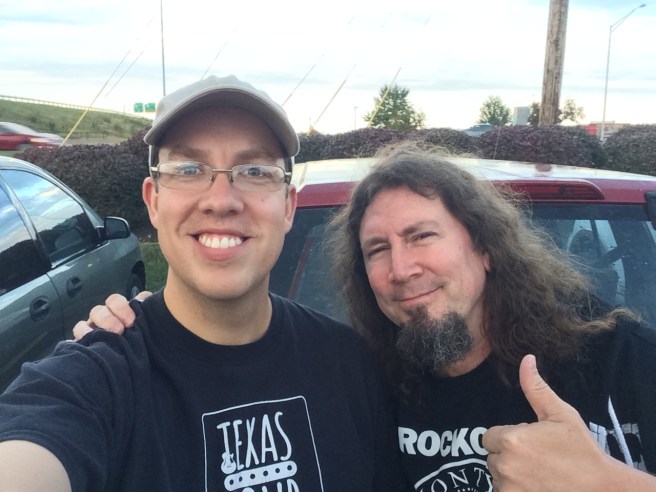
Favorite Celebrity Meeting: Monty Colvin, bass player/vocalist in Galactic Cowboys, guitarist/vocalist for Crunchy.
IMG_0824

Favorite Interesting Experience: sitting in on a Sunday-school class taught by Oklahoma Poet Laureate, Benjamin Myers @OKPoetLaureate

Favorite Teaching Moment(s): My summer Religion and Literature course (with works by Bret Lott, Tania Runyan, Gina Ochsner, Brent Newsom, Addie Zierman, Larry Woiwode, Jeanne Murray Walker, and Benjamin Myers).

Fun Trip Destinations: Minneapolis, Galveston Island, Kansas City, Lake Michigan, rural Minnesota

Favorite Publication: “The North-Central Iowa Spring Break Blizzard Tour” (published in The Cresset)

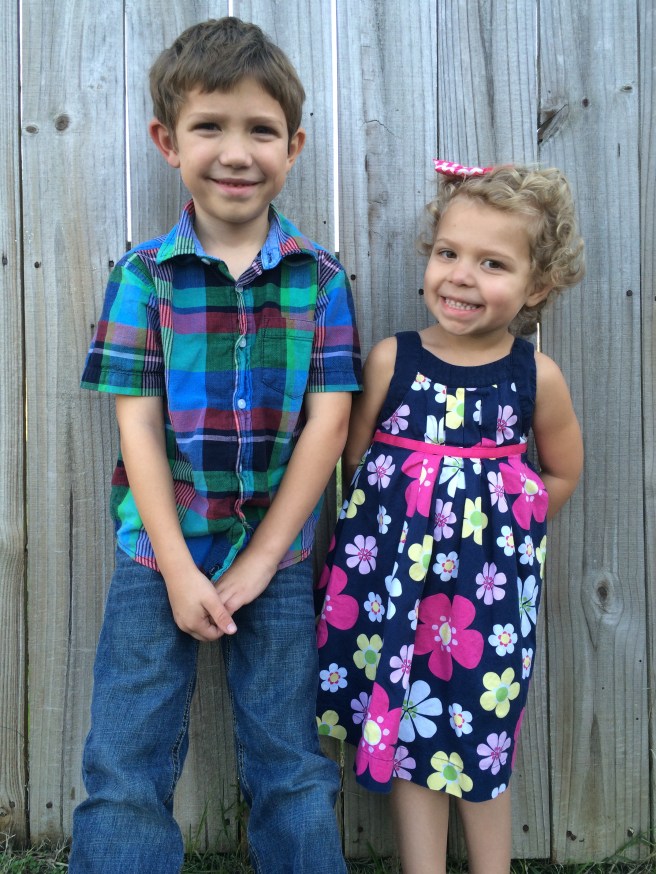
Favorite Photo I Took: 
IMG_0880

I’m looking forward to a good 2016, filled with good books and music, lots of writing, good classes to teach, and supportive friends and family.

Aspirations 

In second grade, a new kid named Ryan Meinert joined my class. He befriended me; I befriended him. So far all normal. I’m not sure how it started, from where the idea descended, but I began giving him a weekly handwritten newspaper: Nate’s News. 

I know I included jokes I gathered from other places. I’m confident I included some news stories; whether they were serious or not, I can’t say. Maybe I included baseball scores, football scores. Maybe I included other sections–I’m just not sure. And I only made one copy of each issue: the one I gave to him.

No copies of this august publication remain.

*

Summer of ’86 was hot and dry across Minnesota. There was lots of dust, and for much of the summer, my house didn’t yet have central AC. We utilized the “fan method” of cooling: put the fan in the window at night. We also had a ceiling fan in the living room, which helped move around the hot air.

Just as with Nate’s News, I’m not sure what prompted this, but I drew a one-panel comic strip. In it, a somewhat human-looking individual is sitting in a chair, the ceiling fan spinning overhead. The joke is the juxtaposition of the man saying, “Boy, is it hot!” with the switch marked “Hot/Cool” set to “Hot.” An attempt ironic humor.

I rode my bike downtown to the office of the local weekly newspaper and asked to speak with the editor. For whatever reason, perhaps because my mom worked as a receptionist there, he agreed to see me. Of course nearly thirty years later I remember none of the conversation I had with the editor, but I do know that I handed him the cartoon, and a week later, I had my first official publication.

*

Two years later, I was immersed in the world of reading comic strips and comic books as well as in making my own. My comic strip was Stupid Cowmix, and among my other creations was the comic book Molecule Man. I spent hours in my room first using my wooden ruler to draw panels and then filling them with text and pictures that I thought were funny, clever, and entertaining. My parents humored me.

But in that time from 6th grade through 8th grade when I was dedicated to the comic world, my drawing ability peaked, and the following year other interests grew and continued on through high school: basketball, music, role-playing games, and theater.

*

And what I realize looking back is that it wasn’t so much about the drawing. It was about story. About pacing and timing. About humor. About making something of my own. Taking ideas and materials and creating something that someone else could read and connect with.

Since my mid-twenties, I’ve dedicated my life to making things: poems, stories, essays, blog posts, literary journals. I can trace a line back through those earlier experiences, realizing that they were preparing me for what I love to do.

Even now, all of my efforts begin with a blank page.

[Note: see this prior post about how I came to write poetry again.]

On Revision

I’ve lately been chewing on “revision.” Two weeks ago in my freshman composition class, I initiated a discussion of students’ writing processes, also bringing up that very word. Two weeks ago in my creative writing class, we read and discussed Anne Lamott’s classic essay, “Shitty First Drafts.” Some of my students discovered a revolutionary approach to writing.

In that beautiful piece, Lamott argues that writers would do well do write first drafts in which they do not restrain themselves. Writers must allow themselves to pursue whichever directions, unconcerned about the end result. She urges writers to imagine their critics as mice and place them in a jar so that they will not distract writers in that important stage of completing a first draft.

A while back I touched on some ideas related to the writing process (in a post on my university’s faculty blog), but I am returning to revision. My creative writing students have asked (and will keep asking), “so how do you know when a piece is finished? How do you know when it doesn’t need more revision?” Those are difficult questions that I answer with my common answer, “it depends.” An example might serve best.

Last Friday morning at an academic conference, I read an original (and as yet-unpublished) short story: a part of my short-story cycle that was my PhD dissertation. I wrote the first draft in March 2010. In the time since, it has undergone various revisions and “versions.” The draft as I read it Friday clocked in at just under 3,400 words. Another version of the story, with a different direction and ending and overall tone, clocked in at 6,500 words.

While I read the story to the audience, I felt as though it was working well, but 5 1/2 years later, I still wasn’t sure. Immediately after I finished reading it, I thought, “I need to cut the first 1/3 of the story, the opening scene.” In the time since then, and having shared my thoughts with my wife who has read the various versions, I received five verbal affirmations of the story from conference participants (fellow writers themselves), and even an email from another participant (sent near midnight).

When is the story done? A good question. Paul Valery quipped the poem is never finished but only abandoned. I like that idea (minus the connotation of abandonment).